
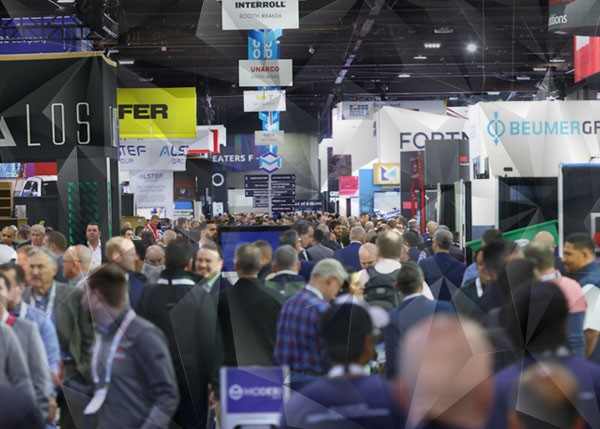
Trade shows remain one of the few environments where buyers and sellers meet face-to-face, in real time with no algorithm to interfere. And yet, across many show floors, a consistent pattern emerges: too many booths that unintentionally make it hard to connect.
This is through no lack of trying, or even funding, but because of small, almost unintentional decisions that shape how people experience a space. Clearly, a few principles worth paying particular attention to stand out. You can even call them laws.
Law #1: No Tables Across the Front
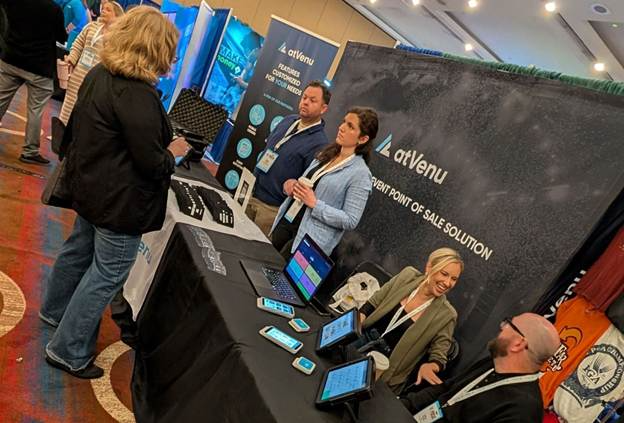
A common setup—and a common mistake. The table creates distance instead of inviting interaction.
One of the most common and most limiting booth setups is the table placed across the front.
It seems practical: a place for materials, a place to stand. It’s a typical store counter. But in practice, it creates a barrier, both physical and, more importantly, psychological.
The moment that table goes up, the space signals separation:
This is our space. That is yours.
Prospects are unable to get close. Conversations happen at arm’s length or not at all.
And far too often, people simply keep moving with the foot traffic flow, because distance makes engagement harder.
A Simple Shift Changes Everything
Move the table to the back or side. Open the front.
Create a space people can step into, not just approach.
The dynamic changes immediately.
The booth becomes less of a display—and more of an environment for interaction.
If people can’t step into a booth, they’re far less likely to step into a conversation.
Law #2: Your Signage Must Say What You Do
Walk any trade show floor and you’re met with a blur of logos.
Clean. Branded. Polished. And often, unclear.
Because most booths don’t answer the one question every attendee is asking:
“Why should I stop here?”
Company names rarely do that. Logos almost never do. Clarity does.
Clarity Wins in the First 3 Seconds
The most effective booths lead with what they do—clearly, quickly, and without interpretation. Not clever. Not abstract. Just obvious.
Whatever capabilities you are offering, the objective is the same: communicate value in seconds. Because that’s all the time there is. Identity details can follow, but first, the message has to earn the stop.
A logo confirms who you are. A message explains why it matters.
Law #3: Give Them Something to Take with Them
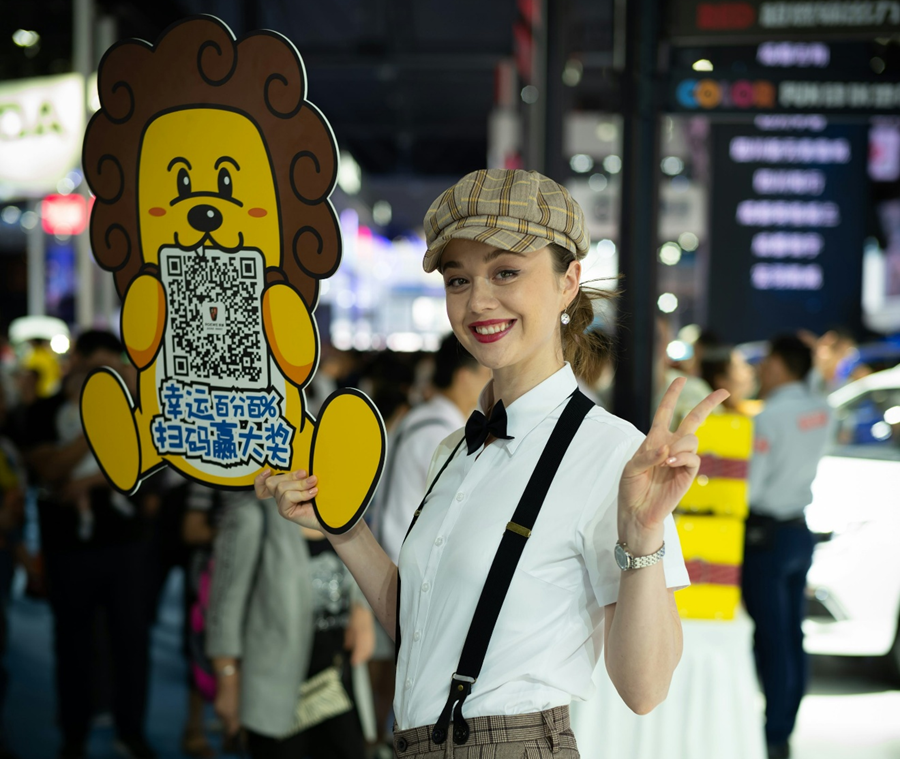
Make it easy to take the next step. The right takeaway turns a moment into a connection.
Trade shows move quickly. Conversations blur. Names fade. Booths blend together in a steady stream of visual noise.
If nothing leaves with the visitor, the interaction often doesn’t either.
From Giveaways to Continuity
The basics still matter:
- Business cards
- Brochures
- Product samples
- Branded apparel
But today, those are just the starting point. The most effective exhibitors think in terms of continuity; what carries the interaction forward after the show.
That might include:
- A QR code leading to a targeted landing page
- A short checklist or resource
- A cost comparison or program overview
- A simple diagnostic that helps evaluate a current approach
- A promotional item or takeaway designed to be used that extends both your brand and the interaction beyond the booth
The format matters less than the function. The goal is to extend the conversation, making it easy to revisit, share, and act. If nothing leaves the booth, the message rarely does either.
Final Thoughts
Being at the show isn’t the goal. Being engaged is.
The most effective booths are built around three ideas:
- Approachability — open, inviting spaces that remove barriers
- Clarity — messaging that communicates value immediately
- Continuity — tools that extend the interaction beyond the booth
The booths that stand out aren’t necessarily the largest or most elaborate. They’re the easiest to engage with.
And in an environment defined by movement and limited attention, that often makes the difference.
At Feury Image Group, we help organizations think through how their brand shows up in physical space. That can include everything from signage and environmental graphics to branded apparel, printed materials, and the tools that support follow-up after the show.
If trade shows are part of your marketing mix, it’s worth stepping back and asking a simple question:
Is your trade show strategy designed to simply display—or to engage?