
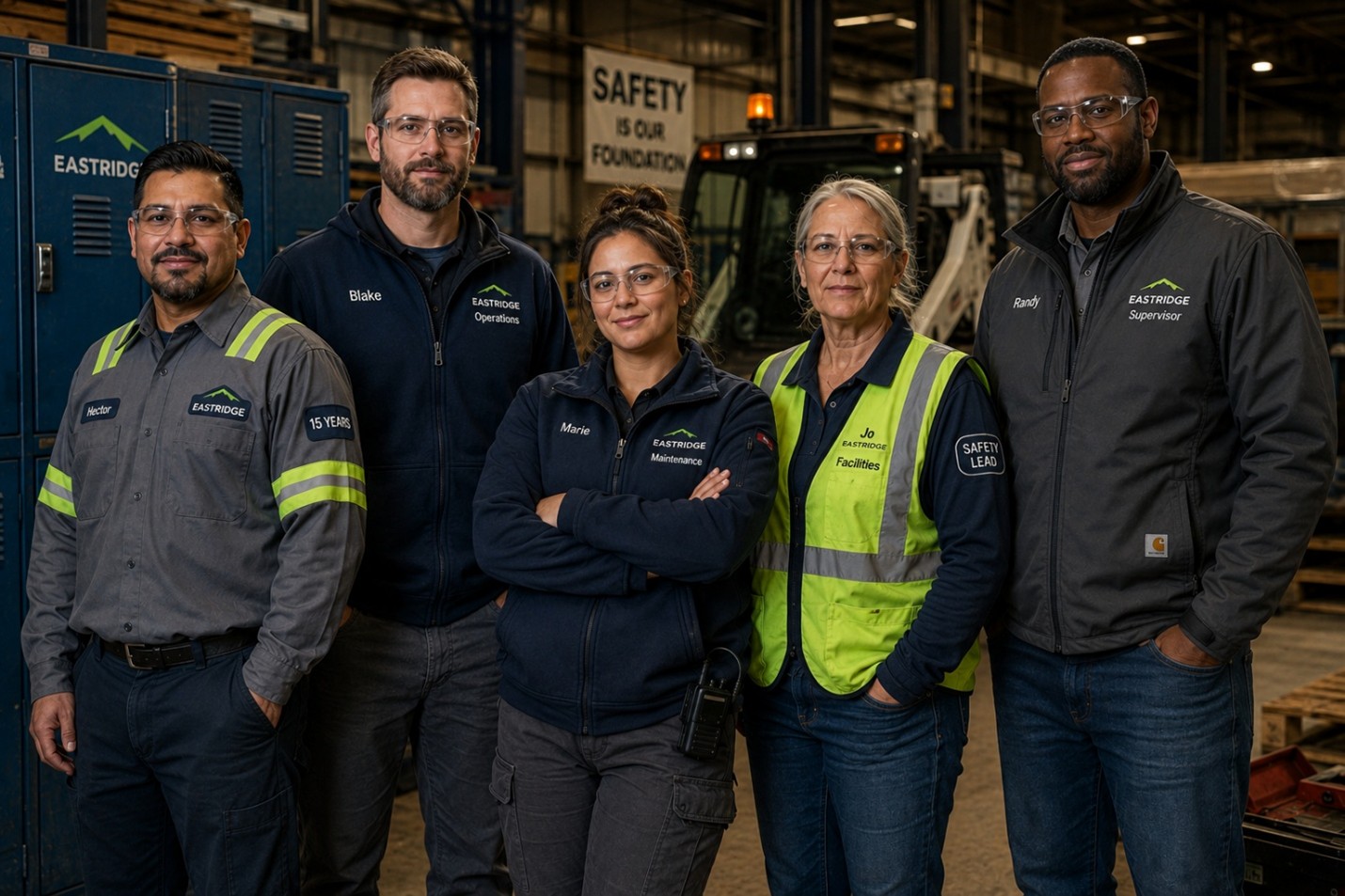
Why Customization and Personalization Matter in Modern Uniform Programs
There was a time when uniforms were treated as purely functional — something employees were simply issued on their first day and expected to wear without complaint.
Today, businesses are beginning to understand something much bigger:
What employees wear affects how they feel, how they perform, and how customers perceive the organization around them.
A uniform program that includes thoughtful customization and personalization in addition to comfort and style doesn’t just create a more professional appearance. It can strengthen employee pride, improve operational clarity, reinforce safety culture, and help businesses build stronger, more consistent brands across every location and department.
And increasingly, employees notice the difference between apparel that feels generic and apparel that feels built around them.
Today’s Employees Expect More Than “One-Size-Fits-All”
The modern workforce is more diverse than ever in role, body type, work environment, climate exposure, and day-to-day responsibility. Uniform programs that fail to account for those realities often struggle with employee adoption and long-term satisfaction.
Industry research has found that:
- 72% of employees rank comfort as the most important factor in workplace apparel
- 67% say fit is critically important
- 47% report feeling more professional in branded uniforms
- 41% report a stronger sense of team belonging
Those numbers reinforce something many employers are already seeing firsthand:
employees are far more likely to consistently wear uniforms that are comfortable, properly fitted, and personalized to their role.
That’s one reason fittings have become such an important part of successful managed uniform programs.
Why Employee Fittings Matter
Proper fittings are about far more than appearance.
When businesses invest in fittings as part of a uniform rollout, employees gain access to:
- sizing that improves comfort and mobility
- apparel appropriate for their specific role
- better layering options for climate and seasonality
- cuts and styles designed for different body types
- safer and more functional garments for physical work
The result is simple. Employees are more likely to actually wear the apparel consistently and correctly.
That consistency matters operationally.
Loose-fitting garments can create safety concerns in industrial environments. Poorly sized apparel can discourage employees from wearing required outerwear, high-visibility garments, or branded layers. In customer-facing roles, inconsistent appearance weakens brand perception and professionalism.
A properly managed fitting process helps eliminate many of those issues before they become daily frustrations.
It also sends an important message to employees; that the company invested time and effort getting this right for them.
Personalization Creates Ownership
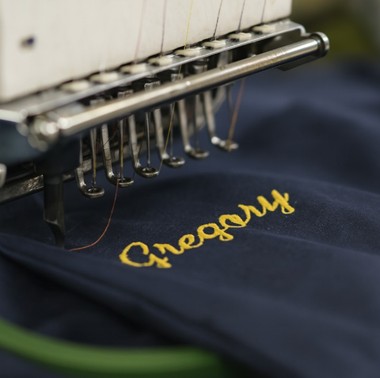
Personalized embroidery helps employees feel recognized while reinforcing brand consistency across uniform programs.
The strongest uniform programs today go beyond logos.
They include elements that make employees feel recognized as individuals while still supporting company-wide consistency.
That can include:
- embroidered employee names
- role identifiers
- department designations
- leadership apparel
- anniversary recognition
- certification patches
- location-specific branding
- customized outerwear for supervisors or senior staff
In many industries, these details improve far more than appearance.
In healthcare settings, they help patients quickly identify departments and responsibilities.
In manufacturing and logistics, they improve accountability and visibility across shifts and facilities.
In transportation and field service, they reinforce trust and professionalism during customer interactions.
In construction and facilities management, role-based apparel can improve communication and safety awareness on active jobsites.
But there’s also a psychological impact that businesses sometimes underestimate.
Employees tend to take greater pride in apparel that feels earned, personalized, and intentionally designed for their work environment.
A jacket embroidered with “15 Years” commemorating service.
A “Safety Lead” designation that communicates authority.
A supervisor shell with personalized identification to help with recognition.
Department-specific apparel for healthcare teams that communicates to patients and visitors as well as other staff.
These small details communicate recognition, experience, leadership, and belonging.
The best uniform programs don’t just identify employees. They acknowledge them.
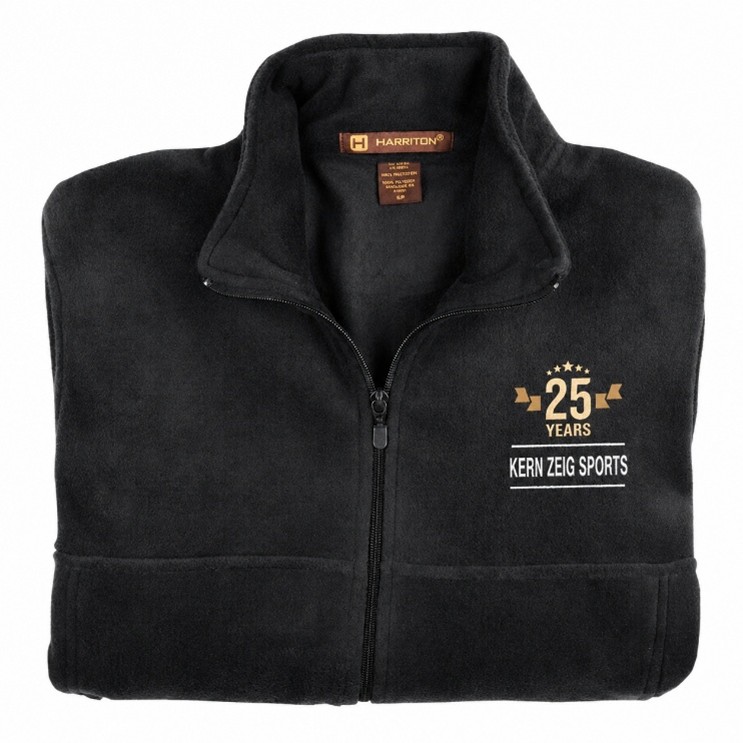
Years-of-service personalization transforms workwear into a visible recognition and retention tool.
Customization Also Protects the Brand
From the business perspective, customization is about more than morale.
It helps organizations create consistency across multiple departments, facilities, and locations.
Managed uniform programs make it possible to standardize:
- logo usage
- decoration placement
- embroidery styles
- color consistency
- role-specific apparel
- approved garment selections
- seasonal layering systems
- branding guidelines
Without structure, customization can quickly become inconsistent and difficult to manage.
One department orders one logo.
Another uses a different shade.
Another chooses completely different apparel.
Another adds unauthorized decoration.
Over time, the brand becomes fragmented, disjointed and confusing.
That’s where managed uniform programs create a significant advantage.
With centralized controls, approval workflows, employee portals, and standardized decoration processes, businesses can scale personalization without losing consistency.
That balance matters because personalization only works when consistency is applied fundamentally.
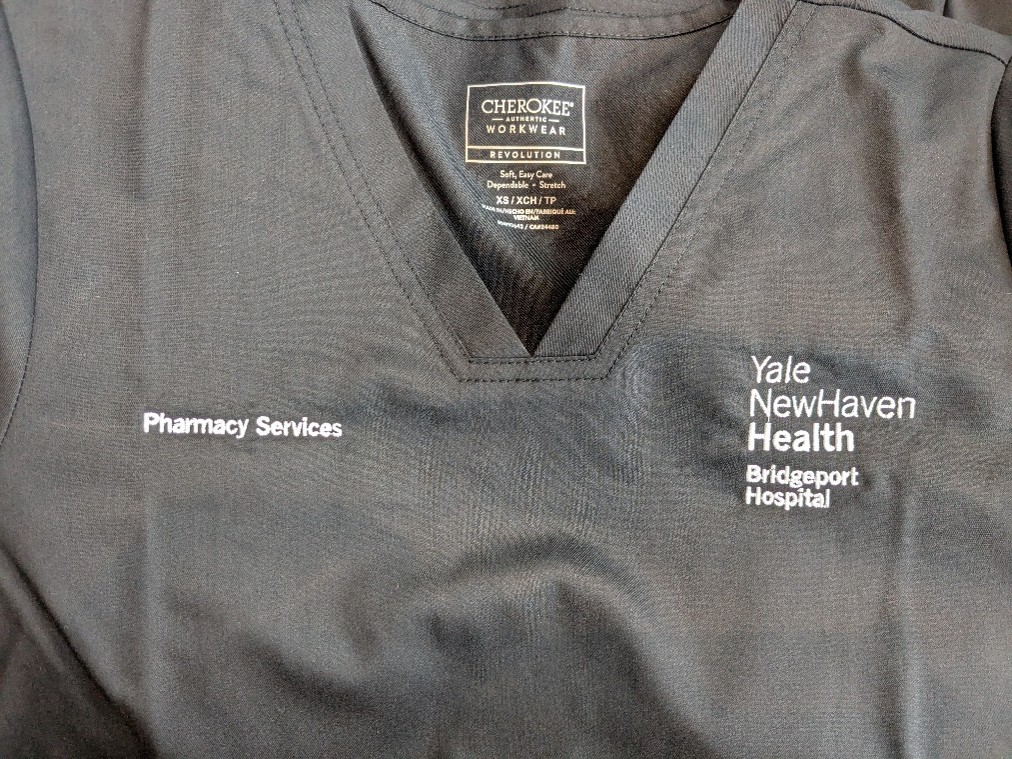
Department-specific embroidery helps healthcare organizations improve identification, professionalism, and operational clarity.
Built Around the Employee — and the Enterprise
The most effective uniform programs today are not built around inventory alone.
They’re built around:
- the employee experience
- operational efficiency
- safety requirements
- climate realities
- role visibility
- brand consistency
- scalability across locations
That requires more than simply issuing garments. It requires planning, fittings, customization, decoration expertise, and systems that support long-term consistency as organizations grow.
At Feury Image Group, customization is viewed as part of a larger strategy — helping businesses create uniform programs employees are comfortable wearing, proud to represent, and able to perform in every day.
Because the strongest programs aren’t just branded.
They’re built around the people wearing them.