
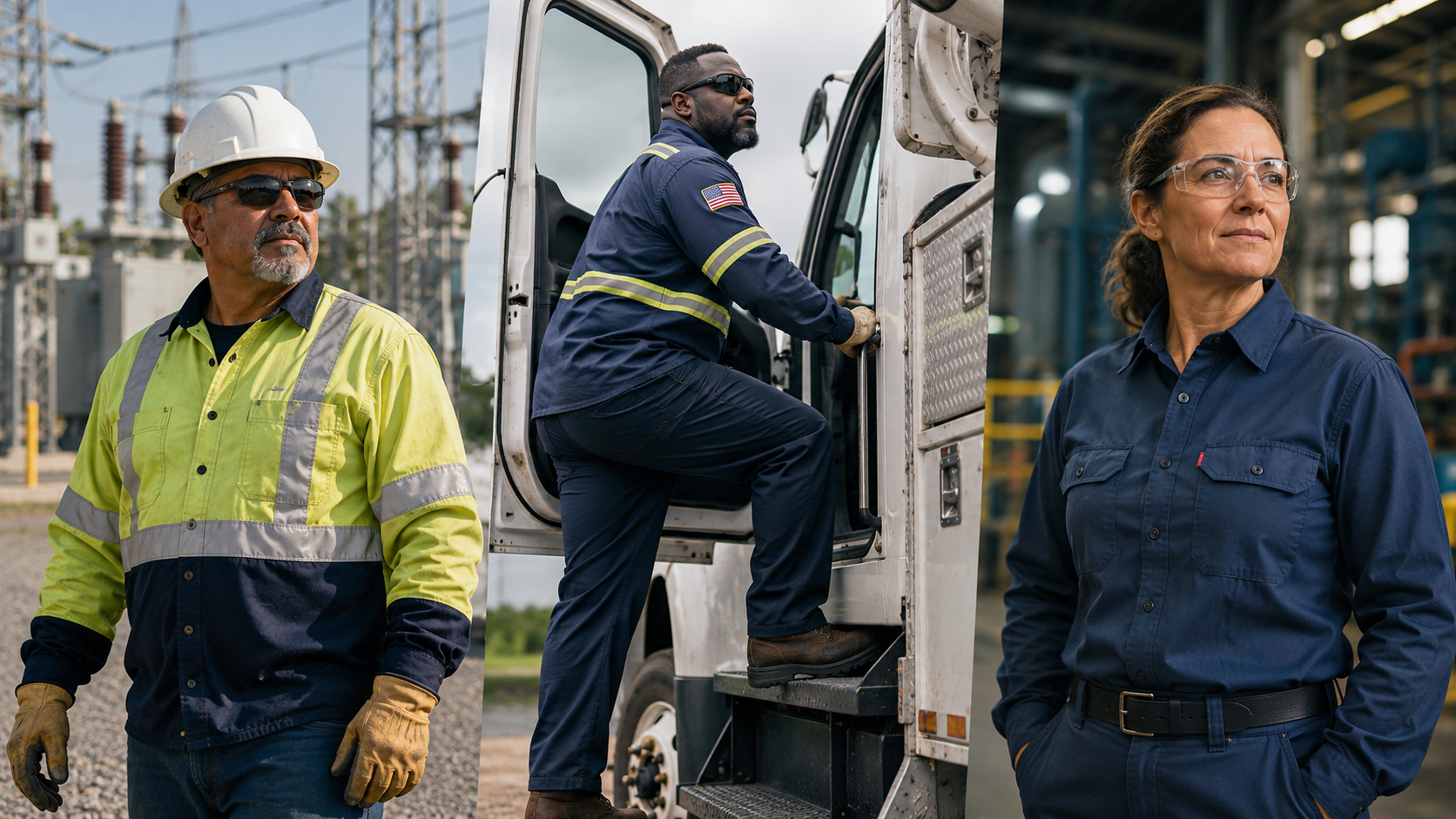
For organizations operating in utilities, energy, manufacturing, transportation, construction, field services, and industrial environments, flame-resistant (FR) and arc-rated (AR) apparel programs carry serious responsibility.
The stakes are higher than simply issuing garments with the right label.
According to industry estimates, between five and ten arc flash incidents occur every day in the United States. Meanwhile, OSHA notes that many serious arc flash burn injuries occur because non-compliant or flammable clothing ignites during the event. These are not isolated safety issues. They are operational realities that organizations must actively manage.
Programs today have to do more than simply provide compliant garments. They must help organizations keep workers safe, maintain consistency across teams, manage inventory and replacement needs, support employee comfort, and simplify ordering across departments and locations.
When those responsibilities become scattered across multiple vendors, spreadsheets, departments, or disconnected systems, programs often become difficult to manage and harder to control.
At Feury Image Group, we help organizations build flame-resistant clothing programs around how their operations actually function — not around generic catalog fulfillment.
Because in real operations, compliance is only the beginning.
In Brief
Organizations that manage flame-resistant clothing programs successfully focus on more than compliance. Effective programs combine safety standards, worker comfort, inventory control, replacement planning, personalization, and operational consistency. The most successful programs make it easier for employees to wear approved garments correctly while giving organizations greater visibility and control. Common industries include utilities, energy, manufacturing, construction, transportation, telecommunications, and field service operations.
Who This Article Is For
This article is relevant for:
- Utility companies
- Energy providers
- Industrial manufacturers
- Construction firms
- Transportation organizations
- Telecommunications contractors
- Public works departments
- Field service organizations
This article is relevant for:
- Utility companies
- Energy providers
- Industrial manufacturers
- Construction firms
- Transportation organizations
- Telecommunications contractors
- Public works departments
- Field service organizations
Compliance Is the Starting Point — Not the Entire Program
FR clothing management programs often begin with compliance requirements tied to industry regulations, internal safety policies, or customer expectations.
Common Compliance Requirements in FR/AR Programs
ASTM performance standards
NFPA 70E requirements
Arc flash hazard categories
High-visibility integrations
Role-specific garment requirements
Seasonal layering systems
Company identification standards
Site or customer-specific compliance expectations
But once the standards are identified, the operational questions begin.
- Who is approved to order what?
- How are replacement cycles managed?
- How do new hires receive the correct garments quickly?
- How do you maintain consistency across multiple locations or departments?
- How do you prevent over-ordering, under-ordering, or employees selecting non-compliant garments?
- How do you maintain worker comfort and acceptance while still meeting safety requirements?
NFPA guidance consistently emphasizes that effective electrical safety programs require more than PPE alone. They depend on coordinated operational controls, procedures, training, and program consistency. These are operational infrastructure questions — not simply apparel questions.
Many organizations begin developing an arc-rated apparel program in response to NFPA 70E requirements, customer expectations, or internal safety initiatives. That is where sophisticated NFPA 70E apparel programs separate themselves from basic purchasing programs.
If Workers Don’t Want to Wear the Gear, the Program Has a Problem
Why Comfort and Fit Matter for PPE Compliance
One of the most overlooked realities of FR/AR programs is this: If apparel is uncomfortable, poorly fitted, excessively heavy, or visually inconsistent with workforce expectations, employees are less likely to wear it correctly and consistently. That creates both safety risk and operational risk.
Recent PPE industry research found that more than three-quarters of employers report challenges with consistent PPE compliance among workers. Comfort, mobility, fit, climate adaptability, and usability all play a major role in workforce adoption. Research published by Occupational Health & Safety Magazine notes that workers are significantly more likely to properly wear and maintain AR/FR garments when they are given approved choices that fit their comfort and work preferences.
“One of the biggest mistakes organizations make is assuming compliance alone guarantees adoption,” says Feury Image Group Vice President Ken Yanicky. “Our programs are structured to give workers approved options that improve fit, comfort, mobility, and wearability while still meeting operational and safety requirements. When employees are more comfortable in what they’re wearing, they are more likely to wear it consistently and correctly in the field.”
Modern FR clothing programs like those offered at Feury Image Group take care to balance:
Compliance
Mobility
Layering flexibility
Climate conditions
Worker identity
Visibility requirements
Professional appearance
Brand consistency
Today’s workforce expects more than oversized garments pulled from a shelf. Organizations increasingly recognize that properly fitted, role-appropriate apparel contributes to:
Better workforce adoption
Improved professionalism
Greater employee satisfaction
Easier worker identification
Stronger safety culture
This is especially important in environments where crews interact directly with customers, municipalities, transportation systems, hospitals, campuses, or the public.
Inventory Management Is Often the Real Operational Challenge
Managing FR/AR Apparel Across Multiple Locations
Many organizations underestimate the complexity of managing safety apparel inventory across growing operations. It’s important to consider that garments all have different:
Wear rates
Replacement timelines
Department requirements
Seasonal needs
Decoration standards
Safety classifications
Budget controls
Without centralized visibility, organizations can quickly lose control of spending, consistency, and compliance. Facilities implementing structured safety apparel programs have reported measurable reductions in injury severity and lost workdays, reinforcing the connection between coordinated PPE management and operational continuity.
Feury Image Group helps organizations create structured apparel programs that support:
Pre-approved garment selections
Role-based ordering permissions
Department-specific apparel visibility
Personalized employee identification
Inventory coordination
Multi-location distribution
Seasonal program management
Budget tracking and approval workflows
For larger organizations, this can transform industrial uniform programs from reactive purchasing into a coordinated operational system.
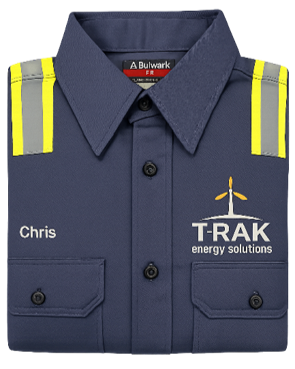
Personalized FR garments help improve identification, professionalism, accountability, and workforce consistency.
Personalization Isn’t Cosmetic. It Supports Accountability.
Why Identification Matters in Industrial Environments
In real-world operations, identification matters. Employees may work across:
Job sites
Utility systems
Warehouses
Distribution centers
Transit operations
Customer-facing environments
Manufacturing floors
Clear identification supports:
Accountability
Professionalism
Security
Team coordination
Customer confidence
Worker recognition
That is why many FR/AR programs incorporate:
Embroidered employee names
Department identification
Reflective striping applications
Position identifiers
Company branding
Safety messaging
The challenge is applying these elements while preserving garment integrity and maintaining program consistency. This is where integrated decoration and operational oversight become critical.
Laundering Policies Still Require Strategic Planning
Ownership vs Rental: Two Different Approaches
Many organizations are transitioning away from the rental/laundering model entirely in favor of direct-purchase ownership programs that provide greater flexibility, visibility, and control. Others maintain internal laundering procedures while standardizing garment sourcing and
program management. In either case, a laundering strategy still plays a major role in flame-resistant clothing program success.
Organizations must determine:
Whether garments are home laundered or commercially cleaned
How replacement cycles are monitored
How damaged garments are identified
How garments are removed from service
How shrinking, fading, or garment degradation are addressed
How backup inventory is maintained
The key is creating a system that aligns with operational reality — not forcing operations into a
rigid apparel model.
The Best FR/AR Programs Strengthen Safety Culture Beyond Compliance
The strongest FR/AR apparel programs do more than satisfy regulations.
They support:
Workforce readiness
Safety culture
Operational consistency
Employee pride
Public trust
Brand visibility
Cost control
Simplified administration
Multi-location coordination
When properly structured, apparel programs become part of how organizations communicate professionalism, preparedness, and operational discipline. That is especially important for organizations managing distributed teams, field crews, transportation systems, utilities, contractors, industrial facilities, and customer-facing technical personnel.
At Feury Image Group, we help organizations develop apparel programs designed around real operations — balancing compliance requirements with the realities of workforce management, logistics, branding, and employee experience. Because the strongest programs are not built around garments alone. They are built around the people wearing them.
FR/AR apparel programs are often viewed as a safety requirement. The most successful organizations view them as operational infrastructure. When compliance, comfort, inventory control, personalization, and program management work together, organizations create safer workplaces, stronger safety cultures, and more consistent operations.
Continue the Built Around You Series
Managing Uniform Programs for Multi-Location Organizations
Building apparel programs that maintain consistency across dispersed operations.
High-Visibility Safety Apparel Programs That Work
Creating safety apparel programs that employees actually wear.
Customization and Personalization of Workforce Apparel
Using identification and branding to improve accountability and workforce presentation.
Uniform Rental vs. Direct Purchase
Evaluating ownership, flexibility, and long-term program control.
Frequently Asked Questions About FR/AR Apparel Programs
What is the difference between FR and AR apparel?
FR (Flame Resistant) apparel is designed to resist ignition and reduce burn injury. AR (Arc Rated) apparel includes testing that measures protection against arc flash exposure. Many industrial garments today are both FR and AR rated.
What is NFPA 70E and why does it matter?
NFPA 70E is a workplace electrical safety standard that helps organizations identify arc flash hazards and determine appropriate protective measures, including arc-rated apparel and PPE. Many utility, manufacturing, energy, and industrial organizations use NFPA 70E guidance when developing safety apparel programs.
What standards are commonly associated with FR/AR apparel?
Organizations commonly reference:
ASTM performance standards
NFPA 70E
OSHA workplace safety requirements
Arc flash hazard assessments
High-visibility classifications where applicable
Requirements vary by industry and job function.
Can FR/AR apparel be customized with logos and employee names?
Yes. Many organizations personalize garments with embroidered names, department identifiers, reflective applications, and company branding while maintaining professional consistency across the workforce.
How often should FR/AR garments be replaced?
Replacement timing depends on:
Garment condition
Frequency of use
Exposure levels
Laundering methods
Damage or wear
Manufacturer guidance
Internal safety policies
Organizations should establish structured replacement and inspection procedures.
Does Feury Image Group provide laundering services?
No. Feury Image Group does not provide laundering services. However, we help organizations structure apparel programs that account for laundering policies, replacement cycles, inventory coordination, and operational management.
What industries typically require FR/AR apparel programs?
Common industries include:
Utilities
Energy
Construction
Manufacturing
Transportation
Telecommunications
Field services
Industrial operations
Infrastructure maintenance
Why do some organizations move away from uniform rental programs?
Some organizations seek greater flexibility, ownership control, garment selection, branding consistency, and cost visibility through direct-purchase apparel programs rather than traditional rental models.