
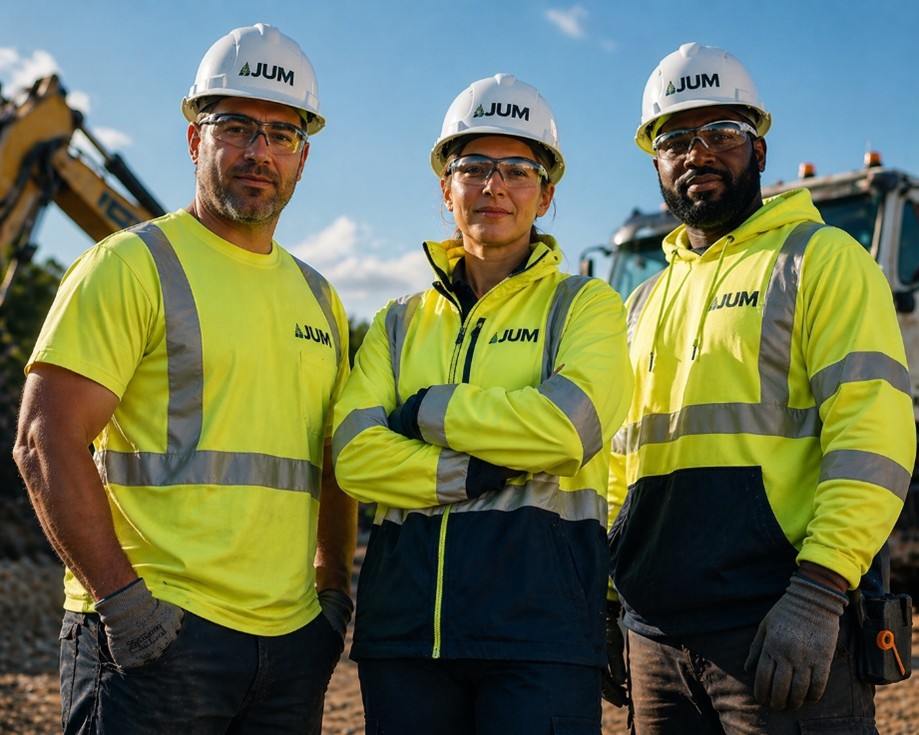
At any jobsite, roadway, or facility floor, you’ll see it high-visibility apparel. But not all hi-vis is
doing its intended job. Too often, safety apparel is treated routinely:
- Order a few standard vests, shirts, or jackets
- Pick a color
- Issue the same gear to everyone
The resulting gear may look compliant on the surface, but it may fall short in protection, performance, or even required standards once it hits the jobsite.
That’s where a Built Around You approach changes the equation.
Hi-Vis Isn’t One-Size-Fits-All
Different roles face different risks. Yet many organizations outfit everyone the same way.
A roadway crew member working near high-speed traffic has very different visibility needs
than:
- A warehouse associate
- A utility technician
- A landscaping crew
- A parking or airport employee
Each environment demands a different balance of:
- Visibility
- Durability
- Mobility
- Weather adaptability
Safety apparel should be built around the job and not simply selected from a catalog.
Understanding the Basics: Class 2 vs. Class 3
These classifications are defined under ANSI/ISEA 107 standards for high-visibility apparel, but
often misunderstood in practice.
- Class 2: Designed for controlled environments or lower-speed traffic where visibility is
still critical - Class 3: Provides the highest level of visibility, using additional reflective striping on the
arms and legs to make workers more recognizable as human movement in low-light or
high-speed conditions
You may also hear the term “enhanced visibility.” While not an official classification, it’s often
used to describe garments—typically Class 3 or beyond—that improve recognition through
additional striping, contrast, or design features.
Of course, compliance is just the starting point. The important question is:
Will your team actually wear it correctly—and consistently?
Why Comfort and Fit Drive Safety
There’s the reality most programs overlook: Uncomfortable gear doesn’t get worn properly.
Every day, you’ll see:
- Jackets left open
- Sleeves rolled up
- Vests sitting in trucks
- Non-compliant alternatives filling the gap
It’s not because workers don’t care—but because the gear gets in the way.
A better approach accounts for real jobsite conditions:
- Breathability in extreme heat
- Layering for cold and wet weather
- Proper sizing across all body types
- Flexibility for movement during long shifts
When gear fits right and feels right, compliance improves—without constant enforcement.
Visibility Is More Than Color
Too often, high-visibility apparel is reduced to “just make it yellow or orange.” But visibility in
real working conditions depends on far more than color. But effective visibility depends on
much more:
- Reflective striping placement
- Contrast materials for daytime visibility
- Garment design that maintains visibility during movement
- Condition of the garment over time
A faded, worn, or dirty garment can significantly reduce visibility—even if it still “looks”
acceptable.
What Happens Over Time
High-visibility garments lose reflective effectiveness over time—especially with repeated
industrial washing, UV exposure, and jobsite wear.
That means a vest can still appear bright, but no longer perform to standard.
If your crews are wearing the same gear year after year, it may not just be worn—it may be
underperforming.
Branding Isn’t Separate from Safety—It Reinforces It
There’s a connection many organizations overlook: People take better care of gear they feel represents them.
When safety apparel includes:
- Clear company identity
- Names or role identification
- A consistent, professional look
It shifts from “issued equipment” to “my uniform.”
That shift drives:
- Higher wear rates
- Better garment care
- Increased accountability on the job
In this context, branding isn’t decoration. It supports compliance and performance.
From Product Thinking to Program Thinking
Most companies approach safety apparel as a purchase.
Leading organizations manage it as a system. It’s a distinction that changes everything.
Managing safety apparel shouldn’t be like a second job—but many times, it does with
someone:
- Tracking who needs what
- Replacing worn or non-compliant gear
- Managing multiple crews, roles, and locations
- Trying to maintain consistency across the organization
The right program removes that friction. Instead of chasing orders and reacting to problems,
you’re working from a structured system:
- Role-based garment selections that eliminate guesswork
- Standardization across departments and locations
- Visibility into what’s issued, worn, and replaced
- Controlled distribution and replenishment
- A centralized platform that supports operations at scale
This is where safety apparel shifts from a line item to your operational advantage.
Where It Matters Most
We see the greatest impact in industries where safety, visibility, and coordination intersect:
- Construction and roadwork
- Transportation and logistics
- Utilities and energy
- Municipal and government teams
- Warehousing and distribution
In these environments, safety apparel isn’t just part of the job, it directly affects performance,
perception, and risk.
Built Around You Means Built for the Real World
At the end of the day, safety apparel should do three things:
1. Protect your people
2. Support how they actually work
3. Hold up in real jobsite conditions—heat, wear, long shifts, and everything in between
Anything less is just checking a box.
Is Your Safety Program Built for the Real World?
If your current approach feels:
- Inconsistent across crews
- Difficult to manage across locations
- Dependent on individuals to stay compliant
…it may not be a product issue. It may be how the program is built.
That’s the difference between issuing gear— and building a system that works.
FAQs: High-Visibility Safety Apparel Programs
What is the difference between Class 2 and Class 3 high-visibility apparel?
Class 2 garments are designed for environments with lower traffic speeds or controlled
conditions where visibility is important.
Class 3 garments provide the highest level of visibility, with additional reflective striping (often
on sleeves and legs) to make the full human form recognizable in high-speed or low-light
environments.
These standards are widely referenced—but often misunderstood in practice. OSHA provides
general guidance on worker visibility requirements, but applying those standards effectively in
real-world conditions requires more than selecting the right class of garment.
How do I know which class of hi-vis apparel my team needs?
In many cases, different roles within the same organization require different classes. It all
depends on the work environment, including:
- Traffic speed and volume
- Lighting conditions (day vs. night)
- Proximity to moving equipment or vehicles
A one-size-fits-all approach can lead to over- or under-protection.
How often should high-visibility apparel be replaced?
There is no single timeline, but replacement should be based on condition—not just age.
Hi-vis garments should be replaced when:
- Reflective striping is worn, cracked, or peeling
- Fabric is faded or heavily soiled
- The garment no longer meets visibility standards
Programs that include tracking and replenishment make this much easier to manage
consistently.
Does washing affect the performance of hi-vis clothing?
Yes. Repeated washing—especially in industrial settings—can reduce the effectiveness of
reflective materials and fluorescent fabric over time.
That’s why it’s important to:
- Follow manufacturer care guidelines
- Monitor garment condition regularly
- Replace items before performance drops below acceptable levels
Can high-visibility apparel be customized with logos without affecting compliance?
Yes—if done correctly. Customization must be placed carefully so it does not:
- Obstruct reflective striping
- Reduce required visibility surface area
- Interfere with ANSI compliance standards
When properly designed, branding can actually improve identification and accountability
without compromising safety.
Why do some employees avoid wearing required safety apparel?
In many cases, it comes down to comfort and usability:
- Poor fit
- Limited mobility
- Heat retention or lack of breathability
- Inconvenience for the task
When apparel is selected based on real working conditions and roles, compliance improves
naturally.
What is a high-visibility apparel program?
A high-visibility apparel program goes beyond purchasing garments. It is a structured system
that includes:
- Role-based garment selection
- Standardization across teams and locations
- Inventory tracking and visibility
- Controlled distribution and replenishment
- Centralized ordering and management
This approach ensures consistency, compliance, and efficiency across the organization.
How does a centralized apparel program improve safety compliance?
A centralized program removes guesswork and inconsistency by:
- Ensuring employees receive the correct garments for their role
- Standardizing approved products across locations
- Tracking usage and replacement needs
- Making it easier to maintain compliance documentation
Instead of relying on individuals, a uniform program systematically supports consistent
behavior.
How do you manage high-visibility apparel across multiple locations or crews?
For organizations with multiple job sites or teams, decentralized purchasing often leads to:
- Inconsistent garment types and compliance levels
- Lack of visibility into who has what
- Delays in replacing worn or non-compliant gear
A centralized program solves this by:
- Standardizing approved garments by role
- Providing a single system for ordering and tracking
- Ensuring consistent compliance across all locations
This approach reduces administrative burden while improving safety and accountability.
What industries benefit most from high-visibility apparel programs?
Any industry where visibility and safety intersect will benefit, including:
- Construction and roadwork
- Transportation and logistics
- Utilities and energy
- Municipal and government operations
- Warehousing and distribution
In these environments, properly managed safety apparel directly impacts risk, performance,
and professionalism.
What is ANSI compliance in high-visibility clothing?
ANSI (American National Standards Institute) sets guidelines for high-visibility apparel in the
U.S., defining requirements for:
- Background material (fluorescent fabric)
- Reflective striping
- Garment design and coverage
These standards help ensure workers are visible in various conditions, but proper selection, use,
and maintenance are just as important as the label itself.