
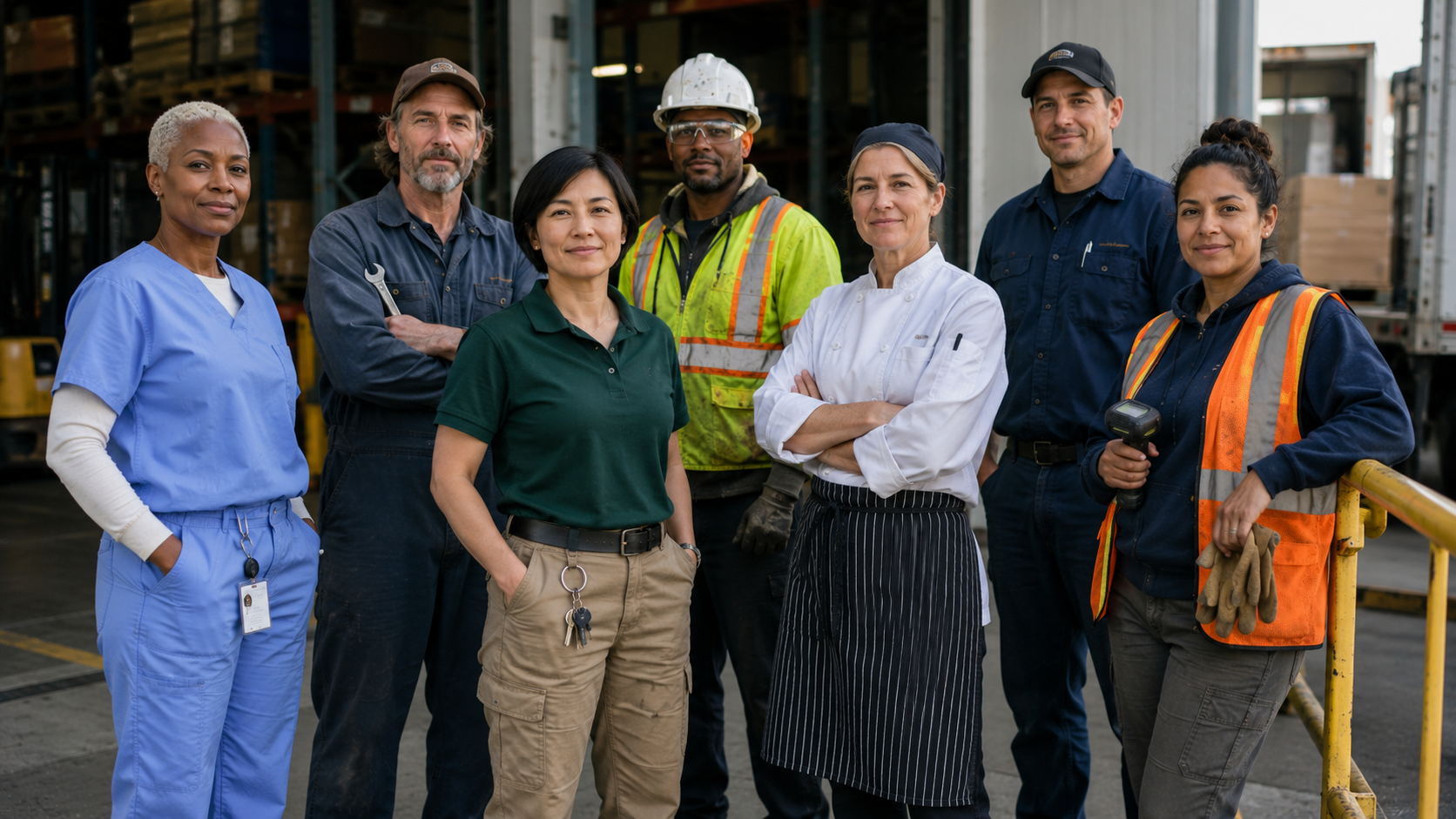
We talk a lot about workforce readiness–what people need to become ready for work: education, skills, training and experience. Employers invest significant time and resources recruiting the right people and preparing them for their roles.
But being qualified for a job and being fully equipped to succeed in it aren’t exactly the same thing.
What are we doing to make sure people have what they need to do their best work once they’re on the job?
It’s a question worth considering as we recognize Workforce Development Month—and throughout the year.
What Does It Mean to Equip Someone for Work?
The answer is different for every organization and every job.
It includes training, information, technology and the tools required to perform a role. It can include a workplace designed around safety and productivity. And for millions of people whose jobs take them into hospitals, warehouses, construction sites, roadways, kitchens, manufacturing facilities, vehicles and the field, it also includes what they wear.
A healthcare employee may need scrubs that allow comfortable movement through a long shift.
A utility or construction worker may need high-visibility apparel, protective footwear or specialized clothing to address workplace hazards and meet applicable safety requirements. In some roles, providing the right apparel and equipment isn’t simply a matter of comfort or appearance—it can be an important part of workplace safety and compliance.
A driver, technician, warehouse employee, restaurant worker or facilities professional may have an entirely different set of needs.
Even within a single organization, those requirements can vary by role, location and working environment.
That’s something I’ve seen repeatedly working with employers across many industries. The people doing the work aren’t interchangeable, and the way we equip them shouldn’t be either.
Small Details Can Have a Big Effect on Workforce Readiness
Work apparel can look like a relatively small operational detail from a distance. To the person wearing it every day, it isn’t.
Consider some basic questions:
- Does it provide the protection the job requires?
- Does it fit properly?
- Is it appropriate for the conditions in which the employee works?
- Can people easily get the items they’re supposed to have?
- Are appropriate fits and size ranges available?
- Does a new employee have what they need when they start?
- What happens when something wears out, is damaged or needs to be replaced?
None of these questions is particularly complicated on its own. Together, the answers can affect safety, compliance, comfort, confidence and an employee’s everyday experience at work.
They can also say something about the organization itself.
When someone arrives for a new job and what they need is ready for them, that sends a message: We were expecting you.
When their apparel fits and is appropriate for the work they’re being asked to perform: We understand what you do.
When getting a replacement or accessing an approved item is straightforward: We’ve thought about how to support you.
Equipping a Workforce to Be Workforce Ready Isn’t a One-Time Event
Getting the first day right is important. But the job of workforce readiness doesn’t stop at onboarding.
People change roles. Employees move between locations. Teams grow. Safety requirements evolve. Garments and equipment wear out. New job classifications emerge.
As the workforce changes, the systems supporting it have to keep pace.
That can become particularly challenging for organizations with multiple departments, shifts, locations or job classifications. What once worked as an informal process can become difficult for employees to navigate and for managers to administer.
That’s why I think employers should periodically ask another practical question:
How easy are we making it for our people to get what they need to do their jobs?
The answer doesn’t necessarily require a more complicated system. Often, the goal should be the opposite: make expectations clear, make appropriate choices available, make access straightforward, and remove unnecessary work for everyone involved.
From Workforce Ready to Workforce Success
Across the country, schools and training organizations are developing skills. Workforce professionals are connecting people with opportunities. Employers are investing in recruiting, onboarding, and development.
But ultimately, workforce development has to translate into success on the job.
That requires people to have the skills to perform a job—and the tools and support to put those skills to use. Employees should be able to focus on their work rather than figuring out how to obtain something they should already have. And the systems surrounding them should reflect an understanding of what their jobs actually require.
Apparel is only one piece of that picture. It’s the piece my colleagues and I happen to see firsthand every day.
And it has convinced me of something broader:
If we want people to succeed at work, we need to think carefully about workforce readiness and how we’re equipping them to succeed.
Workforce Development Month gives us a reason to ask the question. It’s one worth asking throughout the year.
Ken Yanicky is Vice President of Business Development at Feury Image Group