
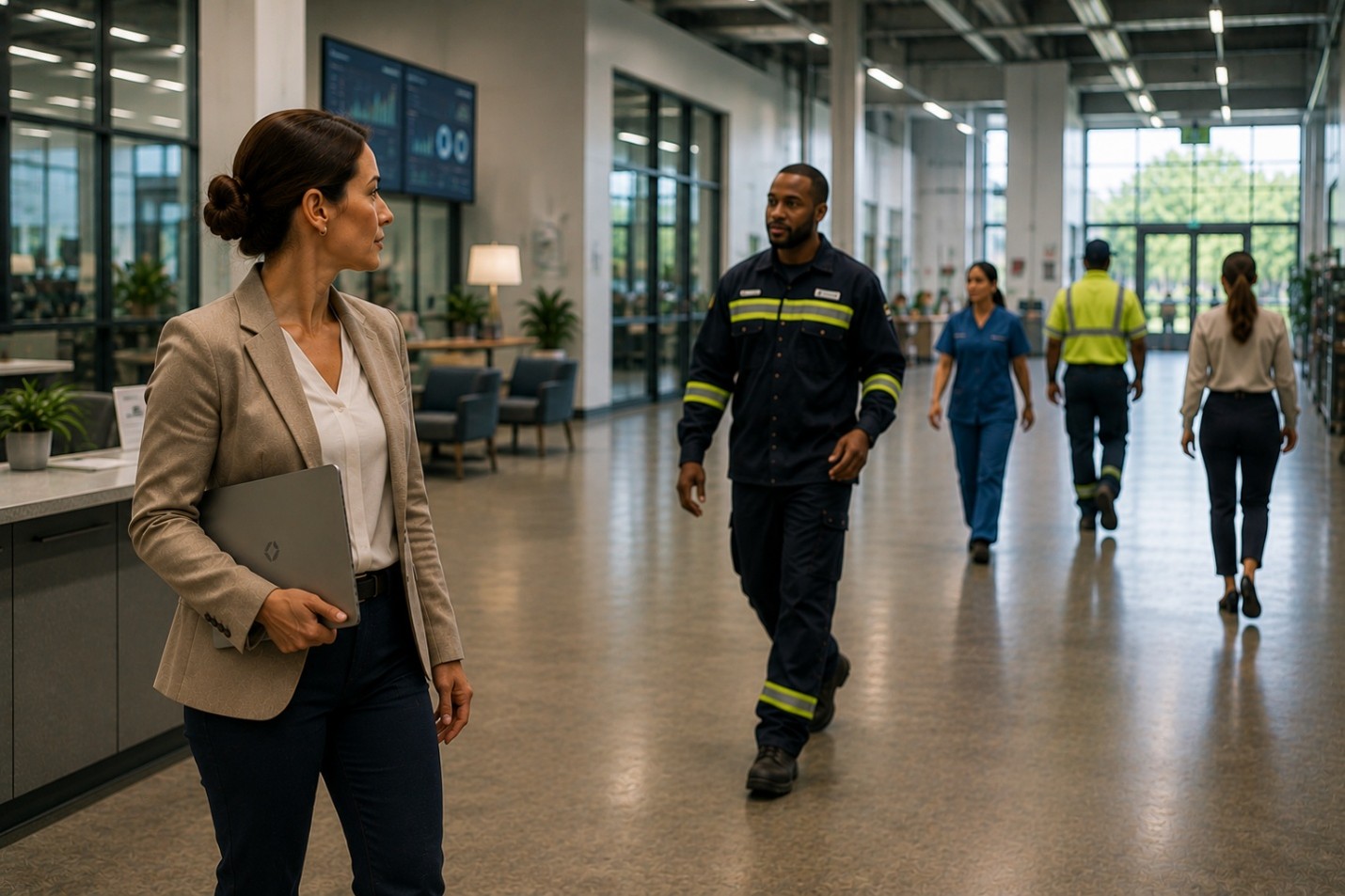
Choosing the Right Apparel Management Strategy for Today’s Workforce
Every organization outfits its workforce. The real question isn’t whether employees need uniforms—it’s how those uniforms should be managed. For decades, organizations have relied on uniform rental and direct purchase programs. Both remain valuable, but today’s workforce is more diverse, more distributed, and more operationally complex than ever before. As organizations grow, the discussion is no longer simply about how garments are acquired. It’s about building an apparel management strategy that supports the workforce, the organization, and the work employees perform
The Question Has Changed
For many operations, the conversation begins with a familiar question:
Should we rent our uniforms or purchase them?
It’s a reasonable place to start. Rental programs have long helped employers simplify garment maintenance, while direct purchase programs provide organizations with ownership and flexibility. Both models have proven successful across countless industries.
But as companies grow, the question itself begins to change.
Today’s workforce looks very different from what it did twenty years ago. A single organization may employ office staff, healthcare professionals, facilities teams, drivers, warehouse associates, technicians, mechanics, security personnel, and field employees—each with different responsibilities, safety requirements, branding standards, and apparel preferences.
The most effective apparel programs are designed around the people who wear them, the work they perform, and the operational processes that support them. The question is no longer simply how apparel is acquired. It’s how apparel is managed. Understanding the strengths of each model is the first step toward making that decision.
How the Two Models Differ
Historically, organizations often issued garments during onboarding and ordered replacements as needed. Today, however, many organizations have evolved beyond that approach by implementing managed direct-purchase programs that centralize ordering, approvals, employee allowances, reporting, fulfillment, and other administrative functions. As a result, today’s comparison is no longer simply between renting uniforms and purchasing apparel—it’s between two different approaches to managing a workforce apparel program.
Both uniform rental and managed direct-purchase programs exist for good reasons. Each was developed to solve different operational challenges, and each continues to provide value in the right environment.
A rental program typically combines garments with ongoing services such as professional laundering, repairs, replacement for normal wear, and scheduled pickup and delivery. For businesses where garment maintenance is a significant operational responsibility—or where specialized laundering is required—rental can simplify administration while helping ensure employees have clean, serviceable apparel available when needed.
A managed direct-purchase program allows an organization to purchase and own its apparel while managing the program through centralized systems for ordering, approvals, reporting, employee allowances, and fulfillment. Rather than simply purchasing garments, organizations manage apparel as an ongoing operational program that supports the entire employee lifecycle.
Neither model is inherently better. The right choice depends on the nature of the work, the workforce being supported, and the administrative processes required to keep the program running effectively.
As companies become more complex, the comparison often shifts from rental versus purchase to a broader operational question:
Which approach best supports the way our workforce actually operates?
The following comparison highlights the operational situations in which each approach may provide the greatest value.
| Consideration | Rental Program May Be Worth Considering When… |
Managed Direct-Purchase Program May Be Worth Considering When… |
|---|---|---|
| Garment maintenance | Professional laundering and repairs are a core operational need. | Employees or departments can manage routine garment care. |
| Specialized work environments | Garments require controlled cleaning or service procedures. | Specialized laundering is not central to daily operations. |
| Workforce diversity | Most employees perform similar work in similar garments. | Employees have varied roles requiring different apparel, branding, or features. |
| Branding and image | Standardization is the primary objective. | Apparel serves as an extension of the organization’s brand and employee experience. |
| Employee onboarding | New hires can be incorporated into an established service cycle. | Organizations need to issue apparel quickly through centralized ordering and fulfillment. |
| Program visibility | Service management is the primary focus. | Leaders want visibility into ordering, budgets, allowances, approvals, and reporting. |
| Multiple locations | A consistent service network supports operations. | Organizations need centralized governance across departments, locations, and employee groups. |
| Seasonal or changing staffing | Workforce levels remain relatively predictable. | Frequent hiring, seasonal staffing, or changing roles require greater flexibility. |
The most effective apparel strategy isn’t determined by one row of the chart. It’s the combination of operational priorities that points toward the right solution.
No organization fits neatly into one column. That’s because a single consideration rarely drives workforce apparel decisions. They reflect a combination of business objectives, workforce characteristics, administrative resources, and operational priorities.
As organizations grow across locations, roles, and departments, apparel programs are expected to do far more than provide clothing. They’re expected to support onboarding, reinforce brand standards, improve administrative efficiency, and help employees receive the right apparel for the work they perform.
Why Are Organizations Reconsidering Their Apparel Strategy?
As organizations grow across locations, departments, and job functions, apparel programs become more difficult to manage. New employees begin work every week, safety requirements differ by role, and expectations for branding, comfort, and inclusion continue to evolve.
As a result, growing workforces have made apparel programs more complex—not because garments have changed dramatically, but because organizations have.
Consider a growing employer with multiple locations. Office professionals, facilities teams, drivers, technicians, security personnel, and field employees may all require different apparel, approval processes, and replacement schedules. The challenge isn’t simply deciding whether to rent or purchase garments. It’s coordinating a program that delivers the right apparel to each employee while maintaining consistent standards across the organization.
In many companies, the traditional approach of issuing uniforms and replacing them as needed no longer provides the visibility or consistency leaders require. At the same time, some leadership teams discover that a service model designed for a relatively uniform workforce doesn’t fully accommodate the variety of roles they manage today.
This is one reason organizations are looking beyond traditional approaches to acquiring and managing workforce apparel.
From Direct Purchase to Managed Apparel Programs
Instead of treating apparel as a series of individual purchases, these programs create a structured system for managing the entire employee lifecycle—from onboarding and role changes to replacements and reporting. Employees receive role-appropriate apparel through approved catalogs, managers maintain oversight through configurable approval workflows, and administrators gain visibility into inventory, spending, and program performance across the organization.
Equally important, centrally managed programs can support a wide range of employee populations. Office professionals, healthcare staff, facilities teams, drivers, technicians, security personnel, and field employees can each receive apparel appropriate to their responsibilities while still operating within one coordinated program.
That’s why leading companies are moving beyond thinking about uniforms as individual products and beginning to manage apparel as an integrated business process—one designed around operational requirements, workforce needs, and organizational goals.
The objective isn’t simply to issue garments more efficiently. It’s to strengthen brand consistency, simplify administration, improve workforce readiness, and give organizational leaders confidence that every employee has access to the right apparel for the work they perform.
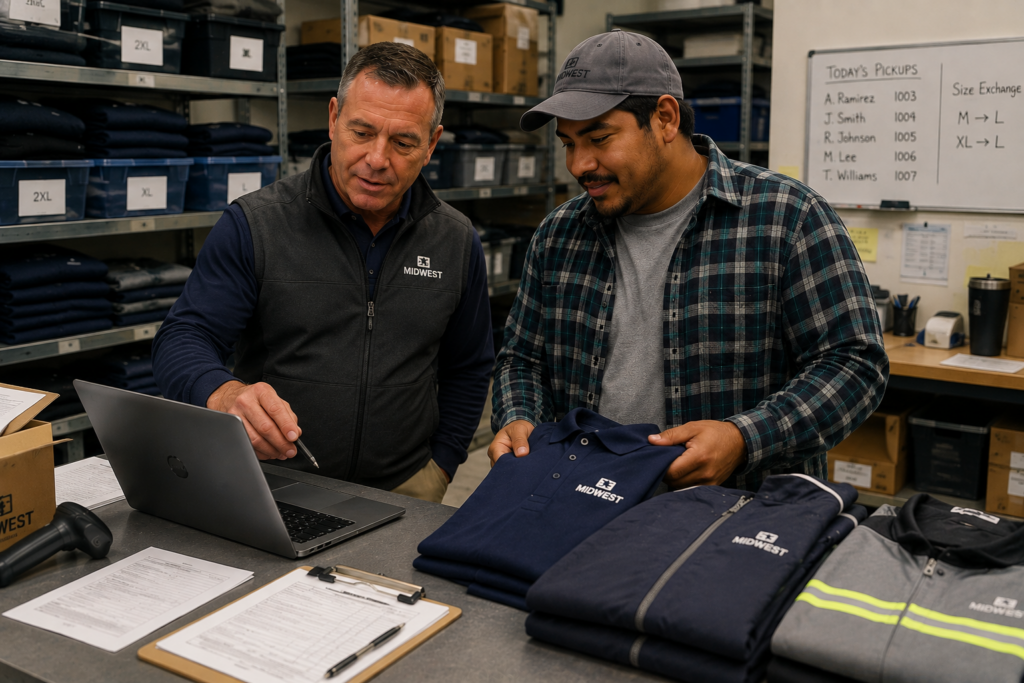
Managed apparel programs bring together people, processes, and technology to help ensure employees receive the right apparel for their roles.
One Organization’s Approach
One national manufacturer of consumer products faced this very decision. For years, the company relied on a traditional uniform rental program for its production workforce. As its operations evolved, leadership evaluated whether that model continued to align with the way employees worked and how the organization wanted to manage its apparel program.
After assessing job functions, laundering requirements, branding, and administrative goals, the company transitioned to a managed direct-purchase program supported by an on-site laundry operated by its own staff. Production employees continued to receive appropriate workwear, but the organization gained greater flexibility in garment selection, stronger brand consistency, and more direct control over apparel distribution and replacement.
The decision wasn’t driven by a belief that direct purchase was inherently better than rental. It reflected the company’s workforce needs, available resources, and long-term objectives. Another organization with different workforce needs, operating conditions, or administrative priorities might reasonably make a different decision.
When Does a Rental Program Make the Most Sense?
For many operations, a rental program remains an excellent solution.
Industries where garments are routinely exposed to heavy soil, grease, oils, chemicals, food production, or other contaminants often benefit from the consistency of professional laundering, repair, and replacement services. In these environments, the value extends beyond simply supplying apparel. The ongoing service itself becomes an important part of the program.
Flame-resistant (FR) apparel deserves its own consideration. While some organizations rely on rental providers to inspect, launder, repair, and replace FR garments, others successfully manage owned FR programs by following manufacturer care instructions, implementing routine inspection and replacement practices, and training employees on proper garment use. The appropriate approach depends on the specific hazards, day-to-day operational requirements, internal resources, and program objectives—not simply whether the garments are rented or owned.
The key is to evaluate the work first. OSHA requires employers to assess workplace hazards and select appropriate protective equipment based on the hazards employees face—not on a preferred procurement model. That same principle applies when evaluating workforce apparel programs. The work should determine the strategy, not the other way around.
The apparel program should support the environment, the hazards employees face, and the organization’s operational priorities. Once those factors are understood, the most appropriate management model often becomes much clearer.
Does Every Employee Need the Same Apparel Program?
As organizations diversify, different employee populations often require different apparel strategies. Production employees may benefit from rental, while office staff, healthcare professionals, drivers, or field technicians may be better served through centrally managed purchase programs.
That doesn’t necessarily require multiple apparel programs. It does require evaluating the operational requirements of each workforce segment and designing an apparel strategy that reflects the work employees actually perform.
Some organizations determine that a single rental program best supports their operations. Others conclude that a centrally managed apparel program provides the flexibility, visibility, and administrative control they need. Still others adopt different management approaches for different employee populations.
The objective isn’t to conform to a particular model. It’s to create an apparel strategy that supports the organization while ensuring employees receive the apparel they need to perform their jobs safely, comfortably, and professionally.
Built Around You™ Insight
The best apparel programs aren’t defined by how garments are acquired. They’re defined by how well they support the organization, the people who wear them, and the work they perform every day. That’s why the strongest apparel programs begin with the work being performed and build outward from there.
Key Takeaway
The question isn’t whether uniform rental or direct purchase is universally better.
The better question is:
Which apparel management strategy best supports your workforce—and the way your organization operates?
For employers with specialized laundering requirements or service-intensive environments, rental programs continue to deliver significant value. For leadership teams seeking greater flexibility, centralized oversight, workforce-specific apparel, and operational visibility, a managed apparel program may provide advantages that extend well beyond the garments themselves.
The most successful apparel strategies are built around those operational realities.
Let’s Start with Your Workforce
Whether your organization currently rents uniforms, purchases apparel directly, or uses a combination of approaches, the right strategy begins with understanding your workforce.
A thoughtful evaluation considers job functions, safety requirements, locations, branding, administration, and the employee experience—not simply how garments are acquired.
The goal isn’t to choose between rental and purchase. The goal is to build an apparel strategy around your organization, your workforce, and the work your people perform every day.
Every organization is different. Feury Image Group can help you evaluate your workforce apparel needs and build a program around your people, your operations, and the work they perform.
Feury Image Group
973.465.0900
[email protected]
feuryimagegroup.com